Visiting the Vatican with kids can sound ambitious. With vast galleries, centuries of art, and plenty of walking, it is easy to wonder how long younger travelers will stay interested.
The key is not trying to see everything. A family visit works better when children have stories to follow, details to search for, and enough flexibility to spend more time on what captures their attention.
From colorful maps and papal carriages to Michelangelo’s Sistine Chapel, the Vatican has plenty to spark curiosity. This guide explains what to prioritize and how to make the experience enjoyable for the whole family.
Key Takeaways
- Focus on engaging highlights and storytelling rather than trying to see every gallery.
- Turn the visit into an interactive experience using treasure hunts, games, and questions.
- Choose a kid-friendly private tour for greater flexibility, appropriate pacing, and tailored breaks.
Is the Vatican Suitable for Children?
Yes. The Vatican can be a rewarding experience for children, especially when you plan the visit around their age, interests, and attention span. A Vatican tour for children can make the museums easier to enjoy by focusing on memorable stories, visual details, and a manageable selection of highlights rather than trying to cover everything.
The Vatican Museums are also set up to accommodate families. Strollers are welcome, dedicated elevators make routes easier, and families have access to baby-changing facilities, a nursing room, rest areas, and child-friendly dining options.
Top Vatican Museum Attractions for Kids
What should kids see in the Vatican Museums? A shorter list of visually interesting stops is usually more effective than trying to cover every major gallery. These four attractions give children something distinctive to look for, talk about, or remember.
The Gallery of Maps
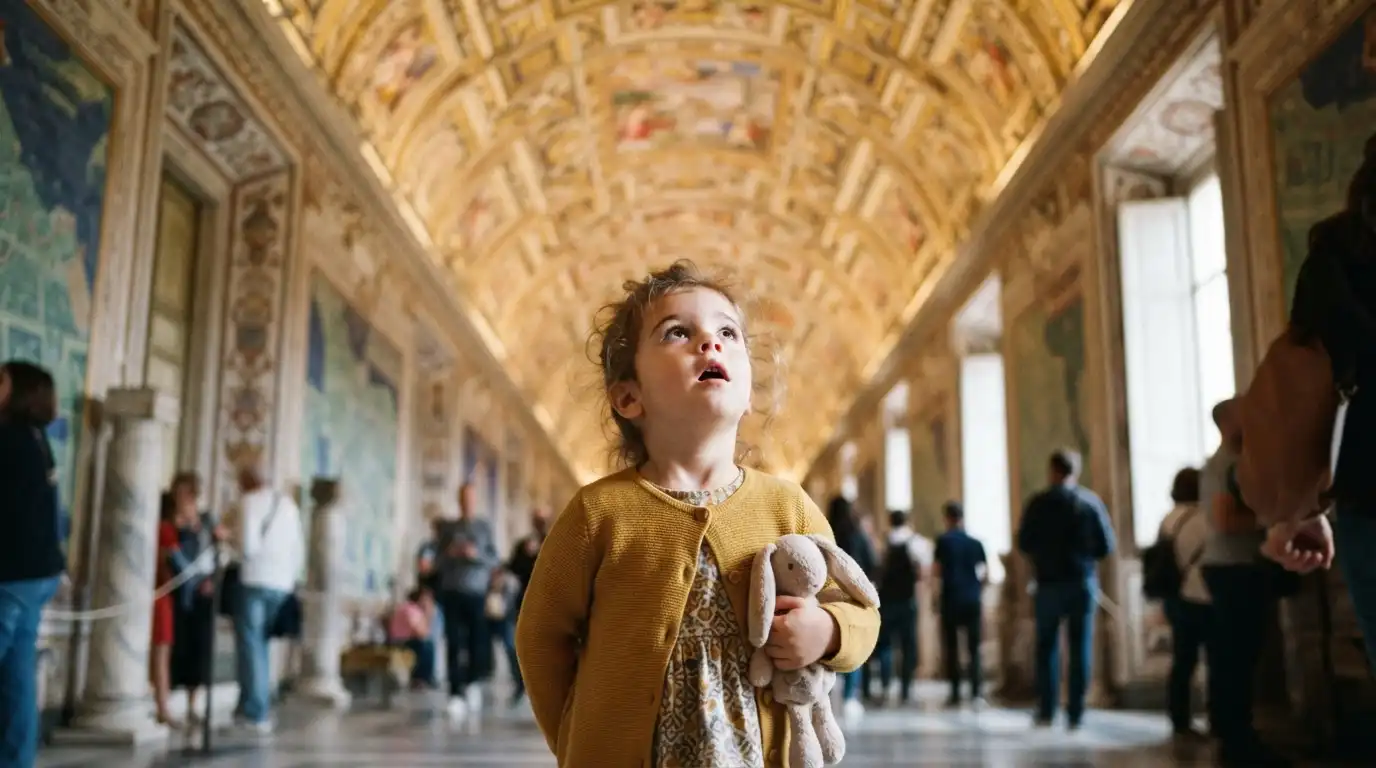
The Gallery of Maps is a good place to turn sightseeing into a game. The long corridor is lined with large painted maps of Italy, so children can look for Rome, familiar cities, coastlines, islands, or places your family has already visited.
Instead of explaining every historical detail, a guide can use the maps to ask questions and encourage children to notice what looks different from a modern map.

The Carriage Pavilion
For younger children, the Carriage Pavilion offers a welcome change from paintings and frescoes. Its collection traces how popes traveled over time, with carriages, sedan chairs, automobiles, and other forms of papal transport.
That gives families plenty of simple conversation starters: Which vehicle looks the most comfortable? How would you travel through Rome without a modern car?
The Raphael Rooms
Older children and teens may appreciate the Raphael Rooms more when you treat them as stories rather than an art-history lesson. In The School of Athens, for example, they can search for Plato and Aristotle or try to spot Raphael himself among the figures.

The Sistine Chapel
Save some anticipation for the Sistine Chapel with children. Before entering, introduce one or two details they can recognize, such as Michelangelo’s Creation of Adam. Knowing what to search for gives them a purpose once they look up at the ceiling.
Families should also prepare children for the chapel’s quieter atmosphere. Photography is prohibited, and visitors are expected to remain silent inside.

How to Make the Vatican More Engaging for Kids
A good Vatican family tour should give children something to do, not just something to look at. Simple changes to the pace and presentation can turn a long museum visit into a series of smaller discoveries.
Turn the Visit Into a Search
Give children a few things to spot along the way, such as animals, unusual symbols, map details, or familiar figures. The Vatican Museums use this approach in their own Family Tour, which combines an illustrated map with a treasure hunt, mysteries, and riddles.
My Private Tours takes a similar approach on its interactive family tours of the Vatican, using activity booklets, games, and clues to keep children involved.
Tell Stories Instead of Listing Dates
A story about Michelangelo painting the Sistine Chapel or what life was like for a pope is usually easier for children to follow than a string of names and dates. Good guides use those stories to give the artwork context without turning the visit into a history lesson.
Follow Their Interests
Not every child will be drawn to the same things. One may want to study the maps, while another is more interested in Egyptian objects, sculptures, or papal vehicles.
Give them room to linger when something catches their attention. The goal is engagement, not equal time at every stop.
Know When to Move On
How long should a family spend at the Vatican? A focused visit of around two to three hours can work well for many families, although younger children may be ready to stop sooner.
If interest is fading, moving to the next highlight can be more effective than extending an explanation.
Plan for Strollers, Rest Stops, and Breaks
The Vatican Museums welcome strollers and provide dedicated elevators, baby-changing facilities, a nursing room, and several relaxation areas with seating.
Knowing where your family can pause makes it easier to take a break before tiredness starts shaping the rest of the visit.
What Makes a Vatican Guide Kid-Friendly?
A kid-friendly Vatican guide does more than simplify the history. The best guides watch how children respond and adjust the pace, questions, stories, and level of detail as the visit unfolds.
For families, that can mean:
- Using stories, games, questions, and visual clues instead of long explanations
- Speaking directly to children and encouraging them to participate
- Adjusting explanations for different ages within the same family
- Knowing which rooms and details are most likely to hold a child’s attention
- Moving on when energy starts to drop rather than forcing every planned stop
A Vatican private tour can give families more flexibility to ask questions, spend longer on the highlights that interest their children, and move through the museums at a more comfortable pace. For younger visitors, that can make it easier to turn the experience into a conversation rather than a fixed lecture.
Frequently Asked Questions
What age is best for a Vatican tour?
School-age children often get the most from a Vatican tour because they can follow stories, games, and visual clues more easily. Younger children can still enjoy the experience with a shorter route and regular breaks, while older children and teens may appreciate more detailed discussions about the art and history.
Should families book a private or group Vatican tour?
A private tour may suit families who want more flexibility around their children’s interests, questions, and attention spans. This can be especially useful when the Vatican is one stop on a broader Rome family private tour, since you can pace the day around the needs of both children and adults. Group tours can work well for families comfortable following a set itinerary and schedule.
Can families skip the Vatican lines?
Yes. Families can book timed-entry tickets or tours with skip-the-line access to avoid waiting in the regular ticket line. However, this does not bypass required security checks, so you may still need to wait. Booking ahead is particularly helpful during busy periods.
Make the Vatican a Family Highlight
Children don’t need to understand every fresco or visit every gallery to have a memorable Vatican experience. Give them stories to follow, details to discover, and enough time to enjoy what catches their attention.
A Rome private tour adds the flexibility and personal guidance that can turn a potentially overwhelming museum visit into a memorable part of your family’s time in the country.